Unsaturated Fat Foods: A Practical List and Simple Food Swaps
Olive oil, avocado, nuts, peanut butter, seeds, salmon, sardines, and soy foods are familiar sources of unsaturated fats. You can use them in everyday meals without following a special diet.
I put this guide together to make choosing these foods easier. You'll find a shopping list, a portion chart, and simple ways to replace some of the saturated fat in your meals. Adding extra oil or nuts does not automatically cause weight loss, so I'll explain where portions fit in too.
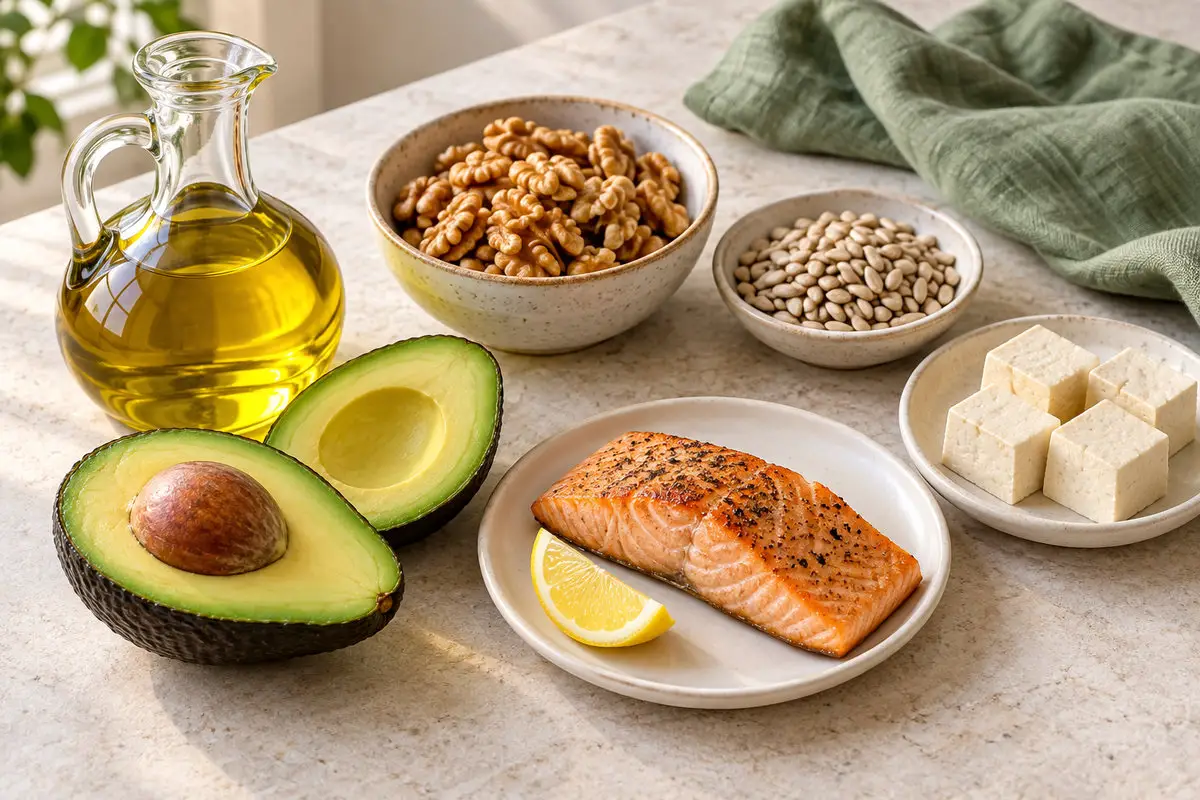
Unsaturated fat foods list
Here's how I would organize the choices for a shopping trip:
| Grocery category | Foods to look for | Easy ways to use them |
|---|---|---|
| Oils | Olive, canola, soybean, peanut, sunflower, and safflower oils | Measure a little for cooking or a salad dressing. |
| Nuts and nut butters | Almonds, walnuts, peanuts, pistachios, pecans, cashews, and peanut or almond butter | Spread nut butter on toast, or portion nuts into a small bowl. |
| Seeds | Sunflower kernels, pumpkin seeds, sesame seeds, chia seeds, and flaxseed | Sprinkle seeds over a meal, or stir ground flaxseed into oatmeal. |
| Avocado and olives | Fresh avocado and plain olives | Put avocado in a sandwich, or use chopped olives in a salad. |
| Fish | Salmon, sardines, trout, and herring | Try a fish dinner, or use canned fish for a quick lunch. |
| Soy foods | Tofu, edamame, and unsweetened soy milk | Use tofu in a stir-fry, serve edamame as a side, or check soy milk as a drink option. |
These are examples, not foods you need to eat every day. Choose the ones you enjoy and can use in meals. Allergies, dietary needs, and personal preferences will affect your choices.
Foods contain a mixture of fats. Olive oil and walnuts both provide unsaturated fat, but their proportions of different fats are not the same. They also contain some saturated fat. [1, 2]
Monounsaturated and polyunsaturated fats, simply explained
The names describe a small difference in the structure of the fat molecules: monounsaturated fats have one double bond, and polyunsaturated fats have two or more. You don't need to memorize the chemistry to use the food list.
| Type | Familiar examples | What to remember |
|---|---|---|
| Monounsaturated fat | Olive oil, avocado, almonds, peanuts, and canola oil | This makes up a large share of the fat in these foods. |
| Polyunsaturated fat | Walnuts, soybean oil, sunflower seeds, and fatty fish | This group includes omega-3 and omega-6 fats. |
The categories overlap. Canola oil, for example, supplies both types. Sunflower and safflower oils also come in different varieties. A bottle labeled "high oleic" has a higher proportion of monounsaturated fat than the traditional high-linoleic version. [1, 2, 3]
Where do omega-3 fats fit?
Walnuts, chia seeds, and flaxseed provide an omega-3 fat called ALA. Fish such as salmon and sardines provide EPA and DHA, other omega-3 fats. Your body can convert some ALA into EPA and DHA, but only in small amounts. Plant and fish sources therefore contribute different forms of omega-3. [4]
Omega-6 fats are also part of this family. The body needs the essential omega-6 fat linoleic acid, as well as ALA, from food. You do not need to treat every food containing omega-6 as something to avoid. [2]
What about coconut oil and butter?
Coconut oil, palm oil, and butter are higher in saturated fat. A food being plant-based does not tell you its fat composition.
Replacing some saturated fat with unsaturated fat can help lower LDL cholesterol, often called "bad" cholesterol. That is one reason the American Heart Association recommends this kind of substitution. It is a heart-health recommendation, not a promise of weight loss. [2]
Unsaturated fat foods chart: portions and calories
I used USDA FoodData Central entries for the specific foods and preparations below. Click a food name to find its USDA record.
These are reference portions, not daily targets or a ranking of the healthiest foods. Compare the amount you actually use. The oil rows use tablespoons, the nuts and seeds use one ounce, the fish use three ounces, and the soy foods use equal 100-gram portions. Avocado and peanut butter have their own clearly stated amounts.
"Unsaturated fat" in this chart is the sum of the reported monounsaturated and polyunsaturated fats. Numbers are approximate, and brands and food samples vary.
Oils
| Food | Portion used | Calories | Unsaturated fat | Saturated fat |
|---|---|---|---|---|
| Olive oil | 1 tbsp (13.5 g) | 119 | 11.3 g | 1.9 g |
| Canola oil | 1 tbsp (14 g) | 124 | 12.8 g | 1.0 g |
| Soybean oil | 1 tbsp (13.6 g) | 120 | 10.9 g | 2.1 g |
Nuts and seeds
| Food | Portion used | Calories | Unsaturated fat | Saturated fat |
|---|---|---|---|---|
| Almonds, raw | 1 oz (28 g) | 166 | 12.0 g | 1.1 g |
| English walnuts, raw | 1 oz (28 g) | 192 | 16.7 g | 1.7 g |
| Sunflower kernels, dry-roasted, unsalted | 1 oz (28 g) | 165 | 12.0 g | 1.5 g |
Avocado and nut butter
| Food | Portion used | Calories | Unsaturated fat | Saturated fat |
|---|---|---|---|---|
| Avocado, raw | 50 g edible flesh | 80 | 5.8 g | 1.1 g |
| Peanut butter, creamy | 32 g (about 2 tbsp) | 188 | 13.0 g | 2.7 g |
Fish
| Food | Portion used | Calories | Unsaturated fat | Saturated fat |
|---|---|---|---|---|
| Atlantic salmon, farmed, cooked with dry heat | 3 oz (85 g), cooked | 175 | 7.4 g | 2.0 g |
| Atlantic sardines, canned in oil, drained, with bones | 3 oz (85 g), drained | 177 | 7.7 g | 1.3 g |
Soy foods
| Food | Portion used | Calories | Unsaturated fat | Saturated fat |
|---|---|---|---|---|
| Firm tofu, calcium-set, uncooked | 100 g (about 3.5 oz) | 144 | 6.8 g | 1.3 g |
| Edamame, frozen, prepared | 100 g (about 3.5 oz), shelled | 121 | 3.4 g | 0.6 g |
A few details make these numbers more useful:
- Oils are concentrated fat. The three oils above supply roughly 120 calories per tablespoon. A teaspoon of the listed olive oil supplies about 40 calories. Measuring the pour can help you keep track.
- An avocado is not a fixed serving size. The chart uses 50 grams of flesh, without skin or pit. Avocados vary too much in size to treat every half as the same amount.
- Peanut butter varies by product. The USDA row is for creamy peanut butter in general, not a promise about every "natural," unsweetened, or reduced-fat brand.
- Fish weights refer to the food as eaten. The salmon is weighed after cooking, and the sardines after draining. Some packing oil remains in drained sardines, so their fat profile includes that contribution.
- Tofu varies considerably. The row is for firm tofu made with calcium sulfate. Silken tofu, other firm products, fried tofu, and tofu with sauce may have different values.
The source and calculation notes at the end explain the portions and rounding.
Simple food swaps and meal ideas
I would start with one change in a meal you already make. Ask, "What will this replace?" That makes the advice easier to use than trying to add every food on the list.
| If you usually use... | Try this instead | Keep this in mind |
|---|---|---|
| Butter for cooking vegetables | A measured amount of olive or canola oil | Use enough for the dish. Changing the type of fat does not guarantee fewer calories. |
| Butter on toast | Mashed avocado or peanut butter | Spread a portion you enjoy, and count the topping as part of the meal. |
| A generous layer of cheese in a sandwich | Avocado slices in place of some of the cheese | Keep the other ingredients you like, and see whether the smaller amount of cheese works for you. |
| Bacon and cheese as the main salad toppings | Salmon or edamame, with a few seeds | Use the new toppings to replace some of the old ones. Measure dressing too. |
| A sausage-based dinner | Salmon or tofu as the main protein | Keep familiar vegetable and grain sides so the change is manageable. |
You can turn those ideas into ordinary meals:
- Breakfast: Whole-grain toast with peanut butter and sliced fruit, replacing the butter you might otherwise use.
- Lunch: A salmon sandwich with lettuce and a little mashed avocado. Check how much mayonnaise or other dressing you add.
- Dinner: Tofu and vegetables cooked with measured canola oil, served with rice.
- A salad: Leafy greens, tomato, cucumber, and sardines with lemon juice. Taste before adding more oil, especially if the fish was oil-packed.
These are meal ideas, not calorie-matched substitutions or a prescribed menu. You can adjust them to suit your appetite and needs. A salad with avocado, nuts, seeds, oil, and fish can be enjoyable, but the portions still add up.
How to read the fat information on a label
Start with serving size, then look at calories, total fat, and saturated fat. If you eat twice the listed serving, you are eating twice the listed amounts. [5]
Some U.S. labels also show monounsaturated and polyunsaturated fat. Those lines are often optional, so their absence does not mean the food contains none. [6]

The older peanut-butter label shown with this guide illustrates the difference. For its listed serving, it shows:
- Saturated fat: 3 g
- Polyunsaturated fat: 5 g
- Monounsaturated fat: 7 g
The two unsaturated-fat lines add to 12 g. The 3 g is saturated fat. This is an illustration from an older package, not current nutrition information for every jar of that brand.
Those three lines add to 15 g, while the label's total fat is 16 g. Label values are rounded separately, so the displayed parts do not always add exactly to the total. I would not use subtraction from rounded label numbers to claim an exact unsaturated-fat amount. [7]
For nut butters, dressings, and spreads, also check the ingredients, added sugars, and sodium. The word "natural" on the front does not replace the nutrition information on the back.
Is refined oil the same as partially hydrogenated oil?
No. Do not treat those terms as interchangeable. Partially hydrogenated oils were a major source of artificial trans fat. The FDA removed their generally recognized as safe status, with the final extended compliance date in 2021. Small amounts of trans fat also occur naturally in some meat and dairy foods. [8]
That history does not make ordinary olive, canola, or soybean oil a partially hydrogenated product.
Will unsaturated fat foods help me lose weight?
These foods can fit into a weight-loss plan, but they do not automatically cause weight loss. Unsaturated fat still supplies calories. Fat provides about 9 calories per gram, whether it is predominantly saturated or unsaturated. [9]
For weight management, consider both what you eat and how much. A measured portion of nuts can fit into a snack. Repeated handfuls from the bag can be a very different amount. The same applies to oil poured into a pan or dressing added to a salad.
The National Institute of Diabetes and Digestive and Kidney Diseases recommends a reduced-calorie eating plan that suits your health needs and preferences and that you can maintain. Choosing a particular fat is only one part of that plan. [10]
My practical suggestion is to choose a few foods you like, use them to replace some existing saturated-fat sources, and pay attention to portions. You do not have to maximize the unsaturated-fat grams in every meal.
A shopping list you can use

You do not need to buy everything. Pick foods that fit the meals you plan to make:
Then choose one swap for the week: oil for some cooking butter, avocado for some sandwich cheese, or fish or tofu for a sausage-based meal.
How I checked this guide
USDA data, portions, and calculation notes
I used USDA FoodData Central for the portion chart and the sources below for the explanations. Each food name links to a USDA search for its record number. The chart uses the Foundation Foods April 2026 download for raw almonds, raw English walnuts, and creamy peanut butter, and the SR Legacy April 2018 download for the other entries. Those are dataset release dates, not dates when every food was tested.
Portions and calculations: I multiplied each value per 100 grams by the portion weight divided by 100. For unsaturated fat, I added the reported monounsaturated and polyunsaturated amounts before rounding. Calories are rounded to whole numbers, and fat amounts to one decimal place. Calculations use 28.35 grams per ounce for nuts and seeds, and 85 grams for each fish portion. The oil tablespoon weights are 13.5 grams for olive oil, 14 grams for canola oil, and 13.6 grams for soybean oil. Other weights are shown in the chart.
About missing values and totals: A missing nutrient value is not treated as zero. All chart entries have reported values for the nutrients shown. The individual fatty-acid totals in USDA data do not necessarily add up to total fat; reporting methods and rounding can differ. I used the listed mono- and polyunsaturated values rather than calculating unsaturated fat as total fat minus saturated fat. [11]
About calories: For the three Foundation Foods entries, I used USDA's food-specific energy estimates, labeled "Energy (Atwater Specific Factors)." For the SR Legacy entries, I used the listed energy in kilocalories. The chart is a reference, not a substitute for the label on a particular product.
Sources
- USDA FoodData Central: downloadable datasets. Individual records are linked in the portion chart.
- American Heart Association: Fats in Foods.
- USDA Agricultural Research Service: Mid-oleic sunflower oil composition. Sunflower varieties differ in their fatty-acid profiles.
- NIH Office of Dietary Supplements: Omega-3 Fatty Acids.
- FDA: Serving Size on the Nutrition Facts Label.
- FDA: Monounsaturated and Polyunsaturated Fat.
- Nutrition-label rounding requirements: 21 CFR 101.9, especially paragraph (c)(2).
- FDA: Trans Fat.
- FDA: Total Fat.
- NIDDK: Choosing a Safe and Successful Weight-loss Program.
- USDA: Foundation Foods Documentation, including energy calculations, rounding, and fatty-acid reporting; USDA data-type documentation.